if i lost everything and had to build a $100k/mo app again with 0 marketing skills, this is exactly what i’d do:
are you ready?
there's a huge gap opportunity right now until everyone catches up. and you don't need to be a genius to take advantage of it.
i've scaled apps to millions in profit using this logic. everything below is what i actually do, not what i think might work.
this is not your usual rage bait article that you'll save and forget. just leave everything, study this and you will make your $10k then $100k/mo app with this knowledge.
i'll break down the a to z process:
I. find what's trending on tiktok in your niche
just open tiktok and search for viral content in your niche. either look at the most recent trending videos or scroll your FYP page to find this content. when you see viral content in your niche, make sure to engage with it. i recommend favoriting each post as this will tell tiktok exactly what types of videos to show you next. before you know it, your entire feed will be filled with similar content in your niche.
your next task is to find a format or trend that is easy to replicate and doesn't require advanced editing skills.
i would say that image slideshows is literally one of the easiest formats to replicate at scale.
you can choose video as well, just keep in mind that the cost of producing video is higher and automation is much harder compared to image slideshows.
here’s a random example from one of our campaigns:

it has 263.1k views, which is strong validation of the format. here are the checkboxes to make sure it passes this mission:
- the post has more than 100k views
- it's easy to make and replicate
- it was posted less than 30 days ago (to ensure it's still relevant)
- there are multiple high performing videos with the same format (to make sure it's repeatable and not a one hit wonder).
if everything checks out, move on to the second step.
II. integrate your app into the format
now let’s think about how to integrate our app into the format so that when we get views, they convert into downloads.
let’s break down the original slideshow as an example:

this is how our creator integrated the app into this format naturally and got even more views than the original trend:

there are only two ways a format fails: either it goes viral but nobody converts, or it converts but nobody watches. the whole game is finding the balance between the two.
a format that gets millions of views but zero downloads means your product is sitting on top of the content instead of inside it. the viewer watches, enjoys it, and moves on without ever connecting the content to your app. it's entertainment, not distribution.
a format that converts well but can't get views means the integration is too heavy. it feels like an ad. people scroll past before it even gets a chance.
test it with a few accounts first. track revenue per 1M views. if the unit economics work, you're ready to scale.
III. learn how to replicate content with ai
this is where most people overthink it and never start. making ai slideshows is way simpler than you'd expect once you know the stack.
here's the exact workflow:
> the images
you need images that look native, not like ai slop that gets scrolled past in half a second.
the tool: nano banana pro. it runs on google gemini and generates images at insane speed for practically nothing.
but here's what most people miss: the default output looks washed out and obviously ai generated. every beginner just types a basic prompt and wonders why their content looks fake.
the fix is a json color grade in your prompt. you upload a reference image to gemini, ask for a 1:1 json prompt, then feed that to nano banana pro. you're explicitly defining camera sensor logic, mimicking an iphone front-facing camera in natural light. this completely bypasses that plastic ai look everyone recognizes instantly.
save your best json prompts. they're reusable forever and the output quality jumps immediately.
if you want a recurring visual character across all your slideshows, generate one strong reference image first and reuse it. consistency builds recognition. people start recognizing your content before they even read the text. we did this with one of our app campaigns, same character across multiple accounts. within a few months people in the comments were tagging the character by name. that level of brand recognition from ai-generated images would cost six figures if you tried to build it the traditional way.
> the text and hooks
for slideshows, the overlay text is everything. one bad line and you lose the scroll.
use claude to generate your copy. but never ship the default output. the biggest tell in ai content isn't the visuals. it's the script. ai writes like a marketer by default: "discover the power of..." nobody on tiktok talks like that.
the fix: feed claude to real comments from your niche on tiktok and tell it to write like a 17 year old who just discovered this and is genuinely surprised. add negative constraints in your prompt: "don't use the words game-changer, revolutionary, or must-have."
> the assembly
this is the part that makes slideshows the most scalable format.
there are tools out there that take a single csv with your image urls and text overlays and batch-produce hundreds of finished slideshows in minutes. the production step is basically solved at this point.
one important note: don't put text directly baked into the images. tiktok pushes native text overlays harder than pre-rendered text. and type the text manually in the app rather than copy-pasting. tiktok tracks typing patterns and flags automated behavior. this single detail can be the difference between getting pushed by the algorithm and getting shadowbanned.
if you want to move beyond slideshows later, the video stack is different. kling for motion, elevenlabs for audio, capcut for editing. but the video route costs more and is harder to automate.
for your first $10k, stick with slideshows. i've personally seen slideshow-only strategies push apps past six figures monthly in revenue. literally just images and text posted across multiple accounts. nothing fancy.
> post-production details that actually matter
these small things separate 10k view videos from 1M view videos:
add 2 to 3% film grain in capcut. it removes the clean digital look and makes the content blend naturally with real ugc in the feed.
export at 1080p, not 4k. lower resolution actually blends better with organic content. 4k screams "this is produced."
run the final export through one round of compression. upload it to telegram, download it, then upload to tiktok. this strips metadata and adds natural compression artifacts that real user content has.
these take 2 extra minutes per video. but they consistently separate the posts that get pushed from the ones that get buried.
once you have a format that works and converts, the next question is: how do i run this across 10, 20, 50 accounts without it becoming my full time job?
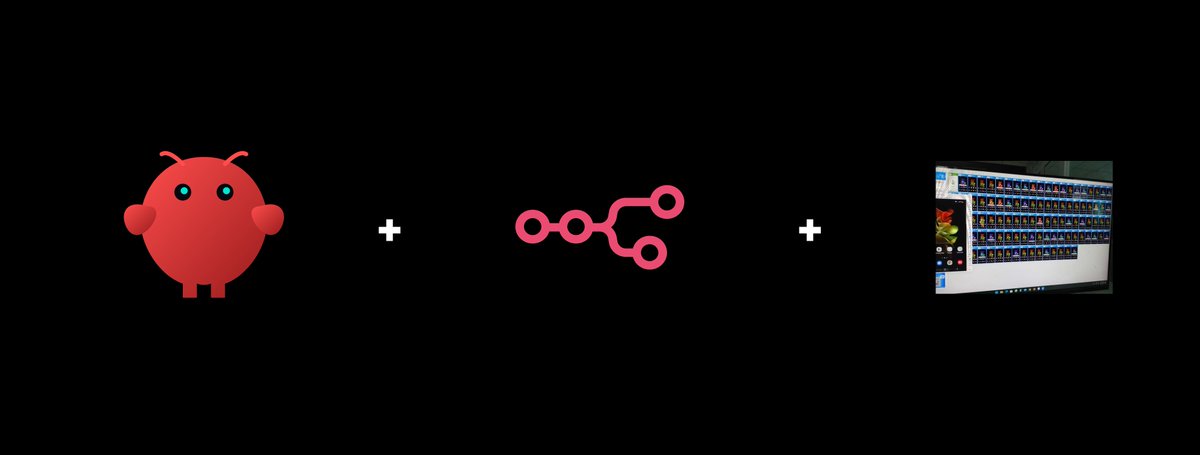
this is where openclaw changes the game.
openclaw is an ai agent framework that runs on your machine. connect it with n8n workflows and you have a fully automated content pipeline from script to post.

here's what the pipeline looks like:
step 1: script generation. claude takes one product brief plus a few reddit complaints from your niche and generates 40 hook variations across different pain points. second pass: claude scores each on specificity and emotional charge, threshold 7/10. about 25 survive. all of this runs without you touching it.
step 2:image generation. nano banana pro processes all scripts through your saved json color prompt. images generated in minutes, not hours.
step 3: assembly. batch tools take a single csv and produce all slideshows at once.
step 4: distribution. openclaw orchestration connected to n8n handles posting. staggered times across all your accounts using residential proxies so platforms treat each one as a unique organic user. the pipeline runs whether you're online or not.
the cost of this entire stack: under $200/month.
the traditional equivalent, hiring editors, managing freelancers, briefing every creator individually, easily runs 20 to 50x what this automation stack costs you monthly. and that's before you factor in the speed difference.
the algorithm rewards consistency above everything else. a channel posting daily for 12 months builds momentum that sporadic posting can never match, no matter how good individual videos are. you can't maintain that pace with discipline alone. you can only guarantee it by engineering it into the system.
and the system gets smarter every cycle. generate content. measure performance. feed data back. generate better content. that feedback loop is what turns a decent system into a machine that gets better on its own.
for the accounts: buy aged tiktok accounts and warm them up before posting. native auto scroll, picture-in-picture mode so tiktok auto-advances, or use an auto clicker with randomized timing (uniform timing gets flagged). the goal is to build behavioral age before you post anything.
one critical detail: tiktok pushes content to people in the same country the account is based in. if your audience is US based and you're posting from a european ip, your views will die. we tested this across our own campaigns. same content, same accounts, only variable was the ip location. views dropped by over 99% overnight from a simple geo mismatch. get static residential US proxies for around $3/month. this alone can make or break your entire operation.
for account management, a va at $2 to $5/hour can handle 10 accounts. 30 to 50 accounts with a small team is completely realistic.
not everyone is ready to build this powerhouse in-house. it's not an easy job and it requires some knowledge and team help.
you can use creators who do the work for you by taking a share of revenue.
this is by far the easiest and most scalable way to go.
if you already have a viral format, just hire new creators who can replicate it. because the format is faceless, they don't need a following. they don't need expertise. they just follow your format and post. your creator supply has no ceiling. there's no bottleneck on talent when the format doesn't require a face.
in the beginning, start by scrolling tiktok in your niche. find creators making similar content. reach out. or hire a va to do it for you: find creators, send the format, close a deal.
try to close cpm deals so it's performance based and creators are motivated to push for more views. tiktok's native creator fund pays roughly $0.05 per 1k views. if your campaigns pay $1 to $2 per 1k views, that's 20 to 40x the return for them.
when the incentive is that clear, creators stop treating it like a one-off brand deal and start treating it like a business. better hooks. more experimentation. the content gets better on its own because they're invested in the outcome.
the smart ones will run fleets. 5 tiktok accounts and 5 instagram accounts simultaneously. all faceless, so there's no ceiling on how many accounts they run.
this is enough to hit your first $10k.
everyone on X will tell you how easy the scaling is. the first $10k is easy with manual effort. but if you want to hit $100k, the hard job begins.
this is the difference between me and a lot of founders who can't get past $10k. they find something that works, then try to recruit creators one by one. sending dms, negotiating rates, briefing each creator individually, chasing deliverables. it turns into a full time job that has nothing to do with building your product.
you can absolutely do this yourself in the early stages. i did. find creators, send them the format, explain the rules, pay them manually. it works when you're testing with 10 or 20 creators. that's how you learn what a good submission looks like versus a bad one. that's how you refine your rules and understand what makes the integration feel right.
but there's a ceiling. once you know the format works and you want to go from a few creators to over 30, the manual approach breaks. you can't brief that many people individually. you can't verify every video yourself. you can't chase payments to hundreds of creators every week. that's where it stops being a growth strategy and starts being an operations nightmare.
this is why i built @affiliatenw. the platform solves the $10k to $100k+ gap in two ways depending on where you are:
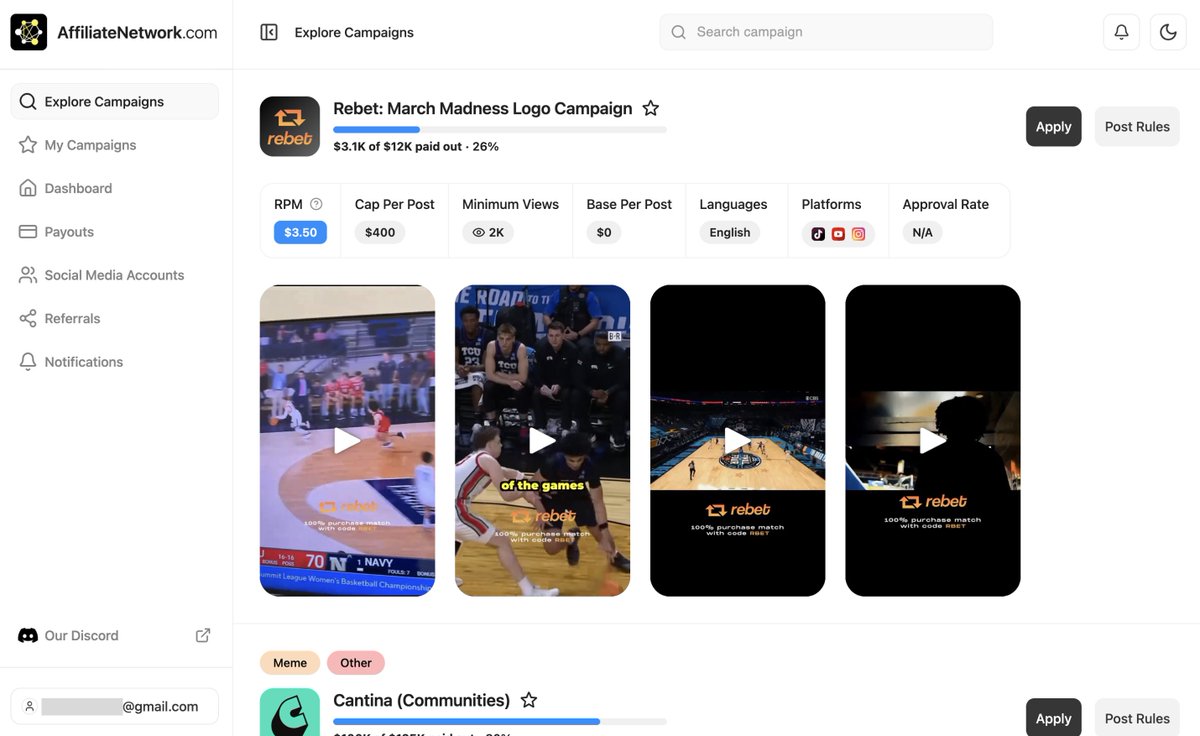
> solution 1: manage your own creators at scale
if you already recruited creators and the manual tracking is killing you, affiliatenetwork.com gives you a full creators management dashboard. you onboard your existing creators onto the platform, set your campaign rules, cpm rates, minimum views, and caps per post, and the system handles the rest.
every submission gets tracked automatically. bot detection flags fake views before you waste a dollar. ai post verification checks each video against your specific rules. payments distribute automatically when posts are approved. no spreadsheets. no dms. no chasing invoices.
you keep working with the creators you already trust, but now you have infrastructure behind it instead of scattered spreadsheets and manual follow-ups.
> solution 2: access 200,000 creators instantly
if you don't want to find and recruit creators yourself, you don't have to. 200k creators are already on the platform waiting for campaigns. you open one, they apply, and the system handles everything from view tracking and bot detection to payouts and tax compliance.
here's how it works:
you describe the format clearly, upload example videos, and set the rules so creators know exactly what a good submission looks like. then you open it up.
thousands of creators apply. you approve the best ones. sometimes you approve everyone. then it runs itself.

because the format is faceless, creators don't need a following or expertise. they just follow your format. that means your creator supply has no ceiling. the format doesn't require a personal brand, so anyone can run it.
and the creators who make real money stay. i have creators earning $30k+ a month on similar formats. other founders try to poach them. it doesn't work. why would they leave a system paying them consistently to negotiate one-off deals with someone new?
most founders end up using both. they start with solution 2 to get volume fast, then bring their top performing creators into solution 1 for tighter management as the operation scales. the platform handles both paths on one dashboard.
let me go deeper into how the verification actually works, because this is the part that makes or breaks your campaign at scale.
did this creator bot their views? did they actually follow the format or just post something loosely related? did they show the product properly or just mention it for two seconds? who gets paid? how much? when?
these are the questions that keep founders up at night once they're past 30 creators. and without a system, every one of them requires a manual answer.
below you can see we paid $0 for posts totaling 2.8B views (yes billion) that didn't follow the campaign rules or had botted views.

this is the part nobody talks about because it's not exciting, but it's the part that determines whether your campaign produces real numbers or inflated ones that mean nothing.
every submission runs through bot detection first. botted views, paid promotion, and engagement group pushes are all flagged automatically before anything gets approved.
then our campaign managers review each post to see if it follows the rules or not.
once our campaign managers reviewed a few hundred posts manually, our ai post verification system kicks in to review the rest. it checks each video frame by frame. it confirms that creators actually followed the specific rules you set. not just the general vibe, but the actual integration requirements.
payments to every creator are handled by the platform. you wire money in, and it distributes automatically to approved posts only. chasing payments, invoices, and awkward conversations about payouts just disappear.
this works the same whether you brought your own creators through solution 1 or you're running with marketplace creators through solution 2. same verification. same bot detection. same automated payouts.
p.s: i invested millions over the years to build this technology to scale hundreds of campaigns (it wasn't easy... huge shoutout to my cracked team)
> know when to scale and when to stop
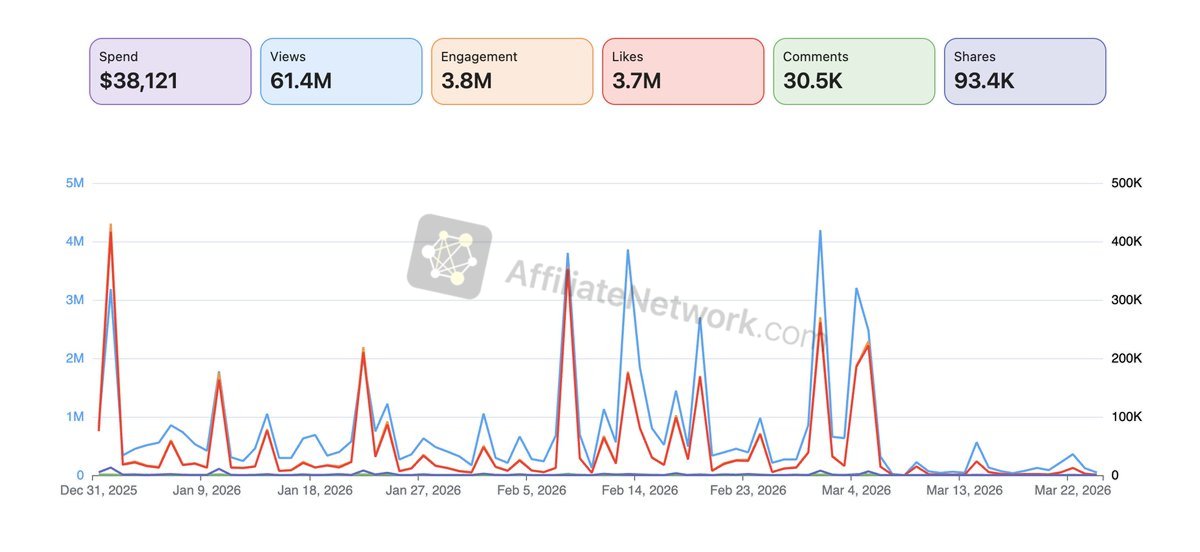
i have a dashboard that follows the full campaign live:
i can match the exact hour a video goes viral to my revenue chart. real conversion data as it happens, not a week later when the data is stale and you've already wasted budget on a format that stopped converting.
this is how i know when a format still has room to scale and when it's peaked and it's time to shift budget to a new one.
don't try to do everything. find one format that works. learn to make it with ai. test it on a few accounts. when the numbers prove it, stop doing it yourself and let the system take over.
you'll still be the one setting direction. choosing formats. reading the data. making the calls. that part is yours and it's the most valuable part.
but you'll never again sit in a google sheet at midnight trying to figure out which creator got paid and which one botted their views. that's what @affiliatenw handles. whether you need to manage your own creators or tap into 200k ready to go, the infrastructure exists so you can focus on the part that actually matters.
this is the full system. slideshows are just the easiest entry point. once you understand how the loop works, you can run it on any format.
if you want access to the same creator network and infrastructure i use, submit this form >>