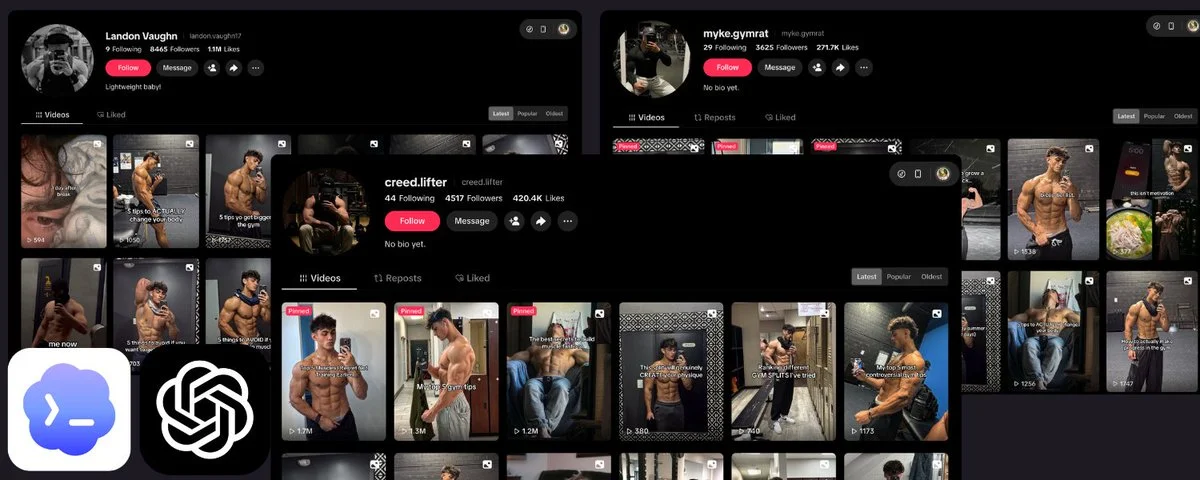
i’m revealing one recent ugc campaign, START to FINISH.
how it scaled to 100M+ views, how i spotted it, how the product integration worked, my spend, and what the full campaign looked like behind the scenes.
i’ve spent over $2,000,000 on faceless ugc for the rizz app alone, and another $10,000,000+ across other apps (i'll share in my next articles so make sure to follow), driving over 150M users to different apps.
this is one example broken down so you can see how the process actually works.
here's the full blueprint.
I. find the viral format first
before you think about creators or budgets, you need to find the format your product fits into, not just any trending format, but one in your niche where your product can live inside the content naturally.
i have people on my team helping me with format research, but the real method is simple... scroll tiktok.
whether manual or with agents, it doesn’t matter. just scroll. find what's going viral in your niche right now.
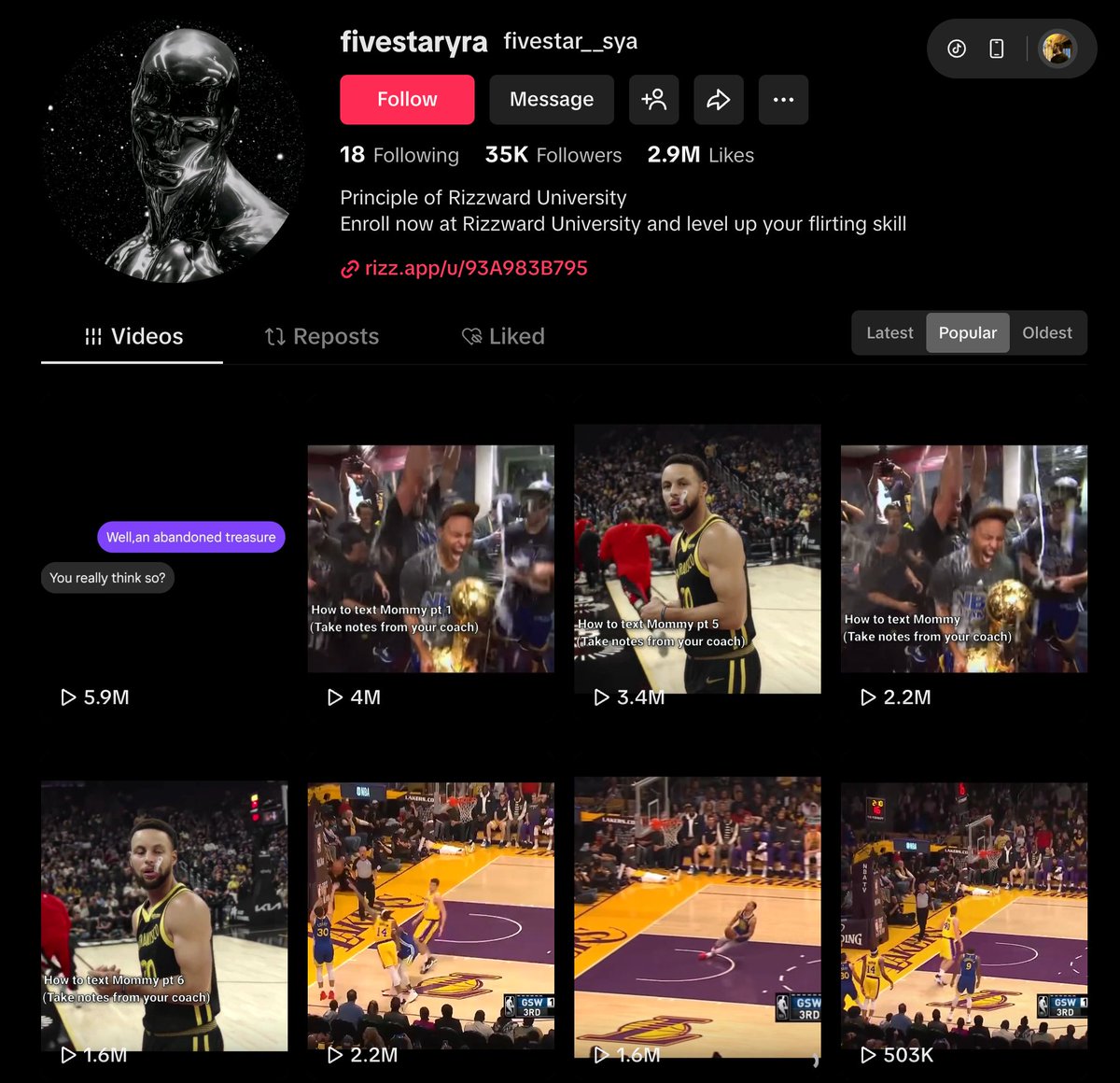
recently we spotted the "shoot your shot" trend: basketball highlight clips with AI-generated rizz lines overlaid mid-conversation. it was spreading fast.

tt@fivestaryra was running it and stacking 720K+ likes per video. that's the signal: when one creator is pulling those numbers on a single format, the format has legs. the audience already validated the content. you're not guessing whether people want to watch this, they already do.
II. inject your product into the format
this is the most important step in the entire process...
the instinct is to find a trending format and paste your product on top of it. you need to do this so organically that there is no disconnect, because people can feel it instantly.
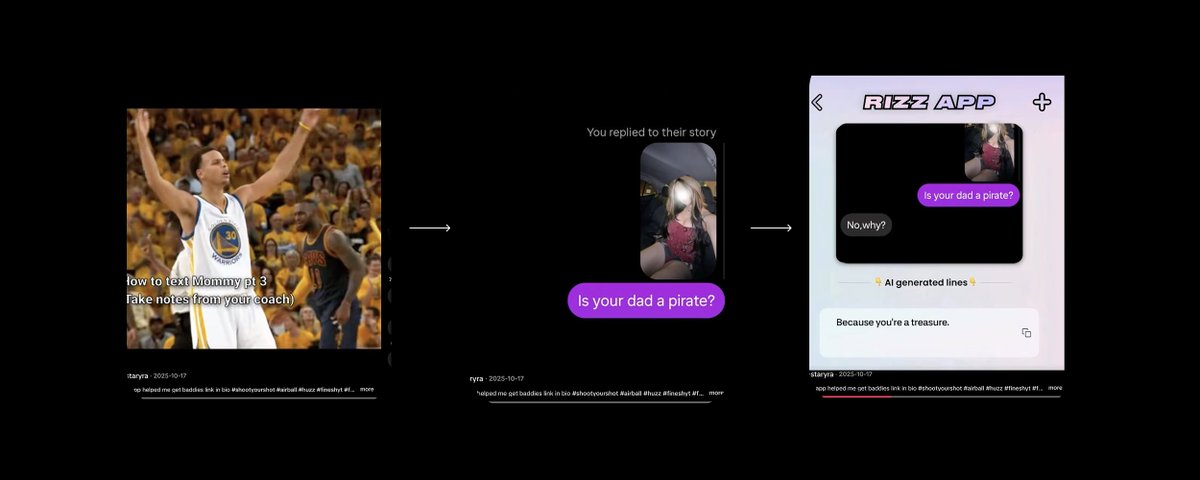
the integration has to feel like the product belongs inside the content, not next to it, not on top of it, inside it.
there are only two ways a format fails: either it goes viral but nobody converts, or it converts but nobody watches. the whole game is finding the balance between the two.
a format that gets millions of views but zero downloads means your product is sitting on top of the content instead of inside it. the viewer watches, enjoys it, and moves on without ever connecting the content to your app. it's entertainment, not distribution.
a format that converts well but can't get views means the integration is too heavy. it feels like an ad. people scroll past before the content even gets a chance.
the rizz format nailed the balance. viewers watched AI-generated pickup lines land in real conversations and immediately wanted to know where those lines came from. the content was entertaining enough to go viral on its own, but the product was so embedded in the format that converting felt like a natural next step, not a pitch. the app was the punchline.
that's what you're looking for. test it with a few accounts first. track revenue per 1M views. if the unit economics work, you're ready to scale.
III. scale with a campaign, not with outreach
this is the difference between me and a lot of founders who can't get past $10k. they find something that works, then try to recruit creators one by one, sending DMs, negotiating rates, briefing each creator individually, and chasing deliverables. it turns into a full-time job that has nothing to do with building your product.
you can absolutely do this yourself in the early stages. i did. find creators, send them the format, explain the rules, and pay them manually. it works when you're testing with 10 or 20 creators. that's how you learn what a good submission looks like versus a bad one. that's how you refine your rules and understand what makes the integration feel right.
but there's a ceiling. once you know the format works and you want to go from a few creators to over 30, the manual approach breaks. you can't brief that many people individually. you can't verify every video yourself. you can't chase payments to hundreds of creators every week. that's where it stops being a growth strategy and starts being an operations nightmare.
this is why i built @affiliatenw to take over. 200K creators are already on the platform. you open a campaign, they apply, and the platform handles the rest.
here's the exact campaign setup:
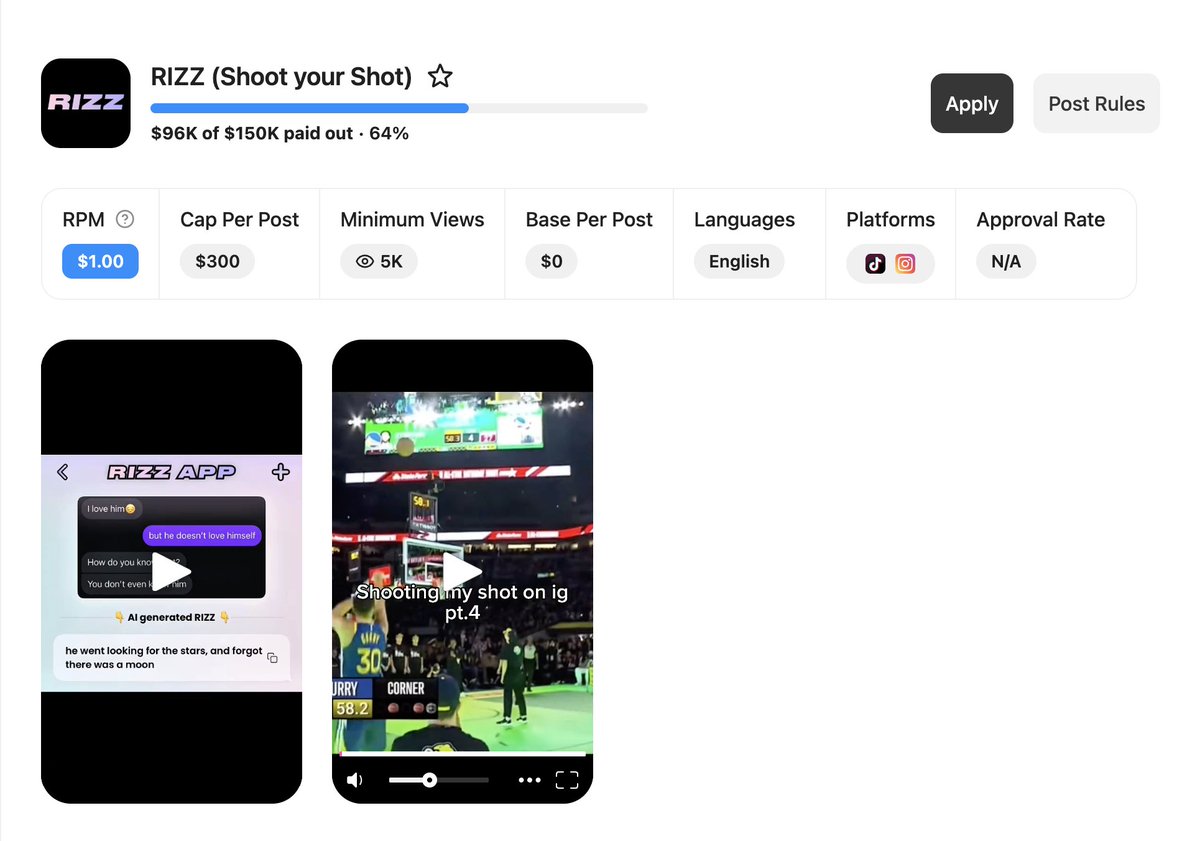
you describe the format clearly, upload example videos, and set the rules so creators know exactly what a good submission looks like. then you open it up.
thousands of creators applied. i approved the best ones. sometimes, i approved everyone. then it runs itself.
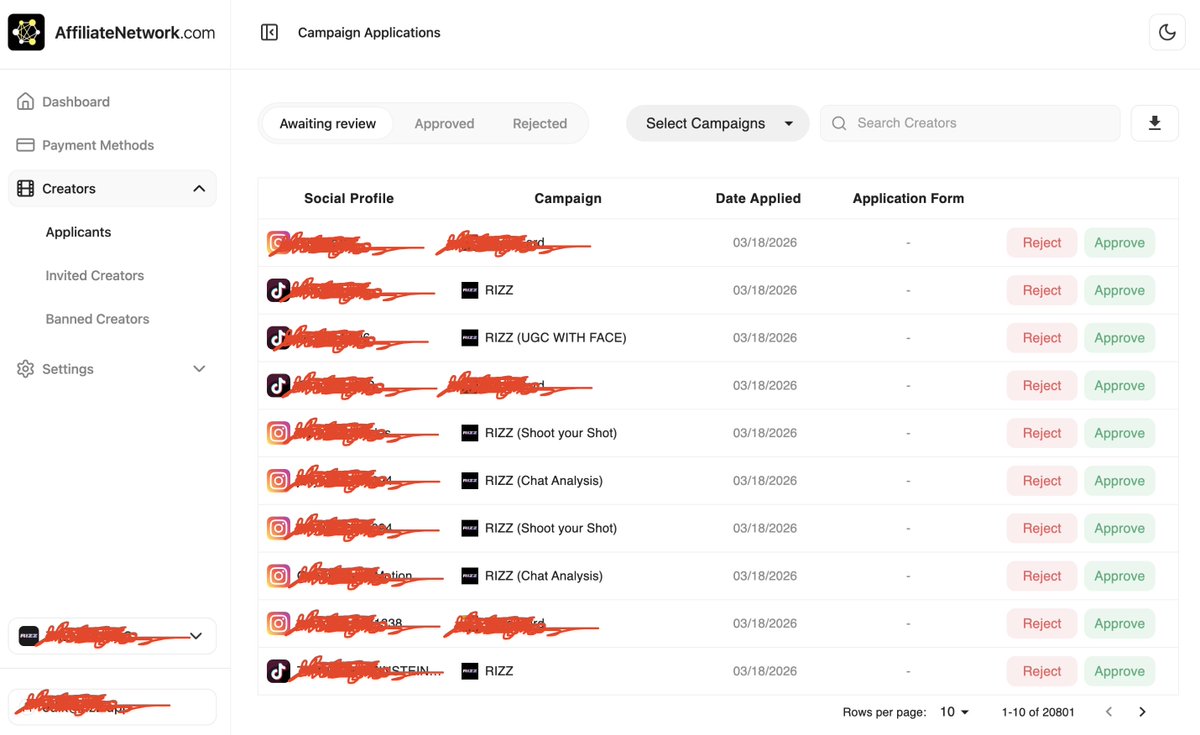
because the format is faceless, creators don't need a following or expertise, they just follow the format. that means your creator supply is basically unlimited. you're not competing for the same 50 ugc creators every other founder is fighting over.
and the creators who start making real money stay. i have creators earning $30k+ a month running similar formats. other founders try to poach them. it doesn't work. why would they leave a system that's already paying them consistently to go negotiate one-off deals with someone new?
IV. quality control and payments
for anyone scaling a product through ugc, the real problem isn't finding creators, it's everything after.
did this creator bot their views? did they actually follow the format or just post something loosely related? did they show the product properly or just mention it for two seconds? who gets paid? how much? when?
below you can see we paid $0 for posts totaling 44M views that didn't follow the campaign rules or had botted views
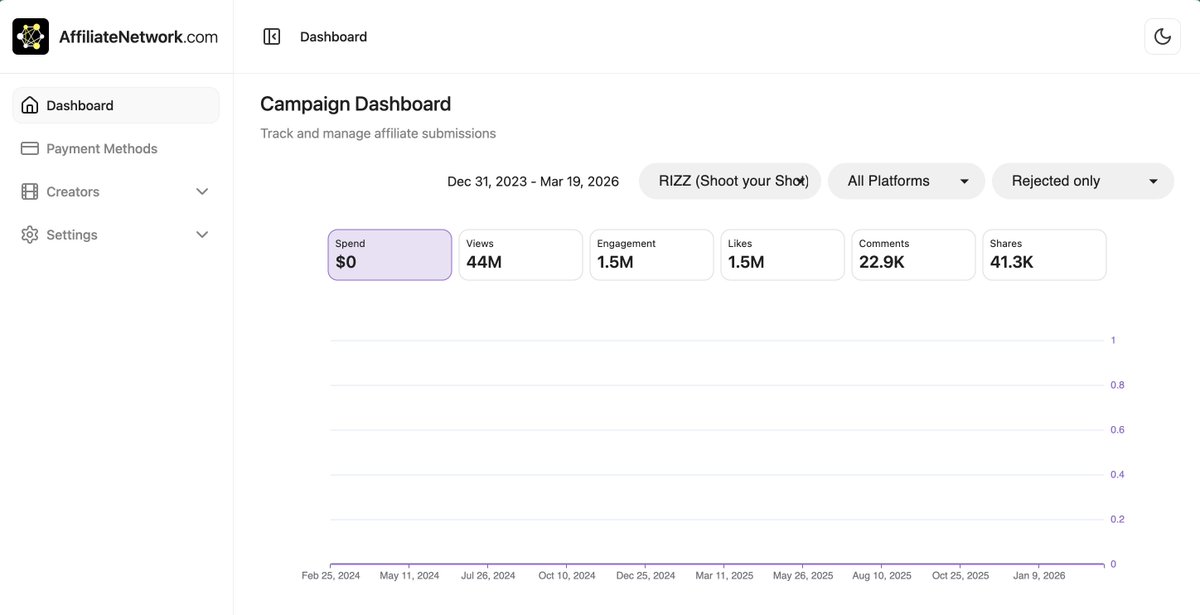
this is the part nobody talks about because it's not exciting, but it's the part that determines whether your campaign produces real numbers or inflated ones that mean nothing.
every submission runs through bot detection first. botted views, paid promotion, and engagement group pushes are all flagged automatically before anything gets approved.
then our campaign managers review each post to see if it follows the rules or not
once our campaign managers reviewed a few hundred posts manually, our AI post verification system kicks in to review the rest. it checks each video frame by frame. it confirms that creators actually followed the specific rules I set, not just the general vibe, but the actual integration requirements.
payments to every creator are handled by the platform. i wire money in, and it distributes automatically. chasing payments, invoices, and awkward conversations about payouts is just a pain without a platform like this.
152.7M views across 4,048 submissions, and every single one was verified before a dollar went out...
p.s: i invested millions over the years to build this technology to scale hundreds of campaigns (it wasn't easy ... huge shoutout to my cracked team)
V. conversion rate tracking
i have a dashboard that follows the full campaign live:
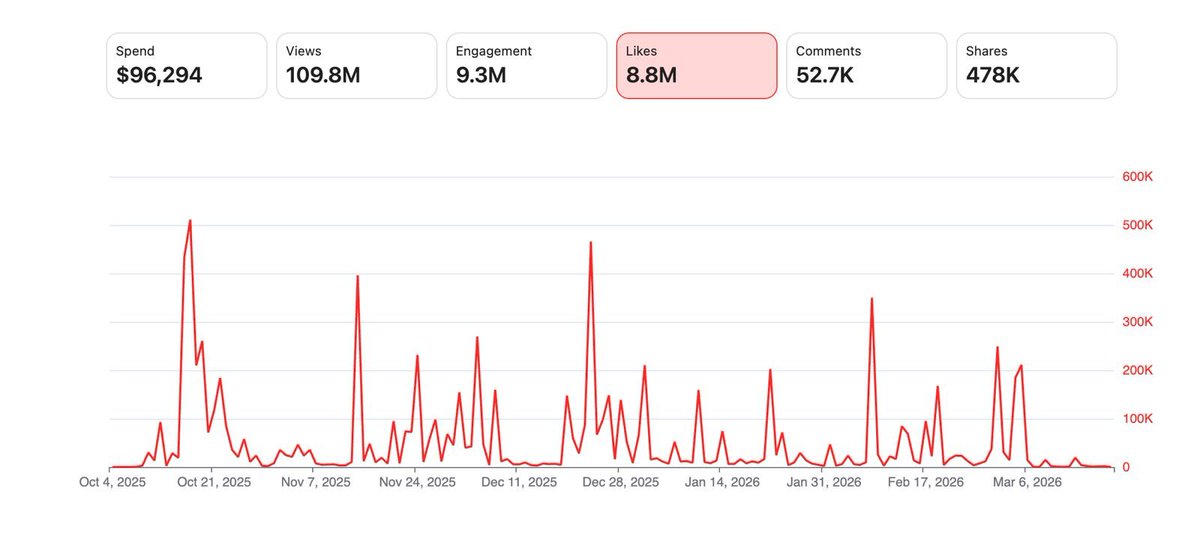
i can match the exact hour a video goes viral to my revenue chart, real conversion data as it happens, not a week later when the data is stale and you've already wasted budget on a format that stopped converting.
this is how i know when a format still has room to scale and when it's peaked and it's time to shift budget to a new one.
what it actually takes
this isn't fully hands-off.
you still need to define the format clearly, examples, rules, and what makes the integration feel native versus forced. you still make final approval calls on edge cases. you still watch conversion rate daily to know when to push more budget or pull back.
what you're NOT doing:
- recruiting creators one by one
- managing a roster
- losing money to botting
- chasing payments
- guessing whether the format converts
- rebuilding the same tracking spreadsheet every campaign
you're steering a growth channel, not operating a creator agency by hand.
organic is the highest-leverage acquisition channel right now. the founders who crack this early are the ones who won't be dependent on ad costs that keep climbing every quarter. and the ones that don't are ngmi (sorry).
this one breakdown is the blueprint, but the system works for any format that hits.
if you want access to the same faceless creators/ai ugc network and infrastructure, submit this form >>
get access: https://tally.so/r/Pd0b1V