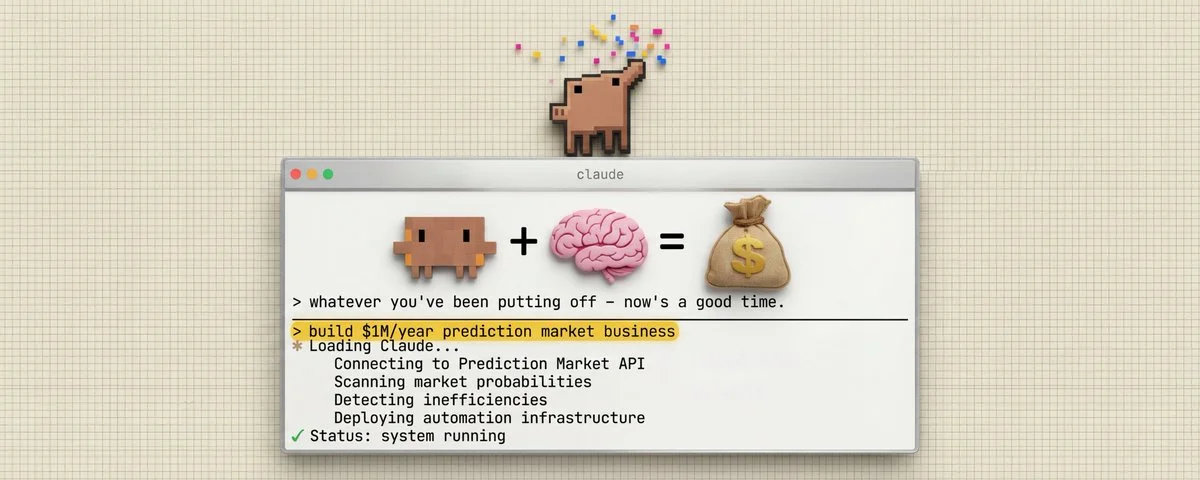
This is a complete A–Z breakdown of How to build a $1M/year business around Prediction Markets infrastructure — not by trading, but by building the infrastructure behind them.
Bookmark this page so you don't lose this article.
Most people lose money on Prediction Markets. The winners aren't smarter. They're faster.
I asked Claude a simple question:
"How would you build a $1M/year business around Polymarket?"
I expected generic AI advice about trading strategies and risk management. Instead, Claude gave me something I didn't see coming — a concrete business plan that has nothing to do with trading.
It was about building the infrastructure that traders use. That's a fundamentally different thing. And that difference is where the entire opportunity lives.
The Stack That Makes This Possible
Before we get into the playbook a quick note on the tools.
Everything in this guide is built on two layers: Claude for intelligence, and Composio for execution.
Composio is the integration layer that gives Claude actual hands — connecting your AI agent to 250+ real-world tools and APIs with managed auth, so you're not spending weeks wiring up Polymarket's API, external data feeds, and execution infrastructure from scratch.
Claude thinks. Composio acts. Together they turn a playbook into a running system.
Here's what nobody tells you about prediction markets:
While you're manually clicking "buy" on a market that just moved, somewhere a bot already took your edge. It entered three seconds ago. Executed across five correlated markets. And exited before you finished reading the question.
You're not competing with other humans anymore. You're competing with automation you can't see.
But here's the contradiction that changes everything:
The people making real money on Polymarket aren't the ones with the best predictions. They're the ones selling tools to the predictors.
Think about it:
You trade → you win sometimes, lose sometimes
You build the infrastructure → you profit from every trader using it
One requires being right. The other requires being useful.
You're trading manually. Somewhere, a bot just took your edge while you were clicking.
The typical Polymarket participant:
- Opens a market.
- Sees a price move.
- Clicks buy.
- Enters too late.
Meanwhile, automated bots are:
Monitoring 50+ markets simultaneously. Exploiting micro-inefficiencies faster than any human reaction time. Compounding small edges 24/7.
The real edge here isn't prediction accuracy.
It's speed and automation.
And the person building automation tools profits from both sides of every trade — whether the trader wins or loses.
Meanwhile, automated bots are quietly exploiting micro-inefficiencies across dozens of markets simultaneously faster than any human can react.
The real edge here isn't prediction accuracy. It's speed and automation. And the person building automation tools profits from both sides of every trade.
Prediction markets in 2026 are crypto in 2018. The bots are already here. The infrastructure isn't.
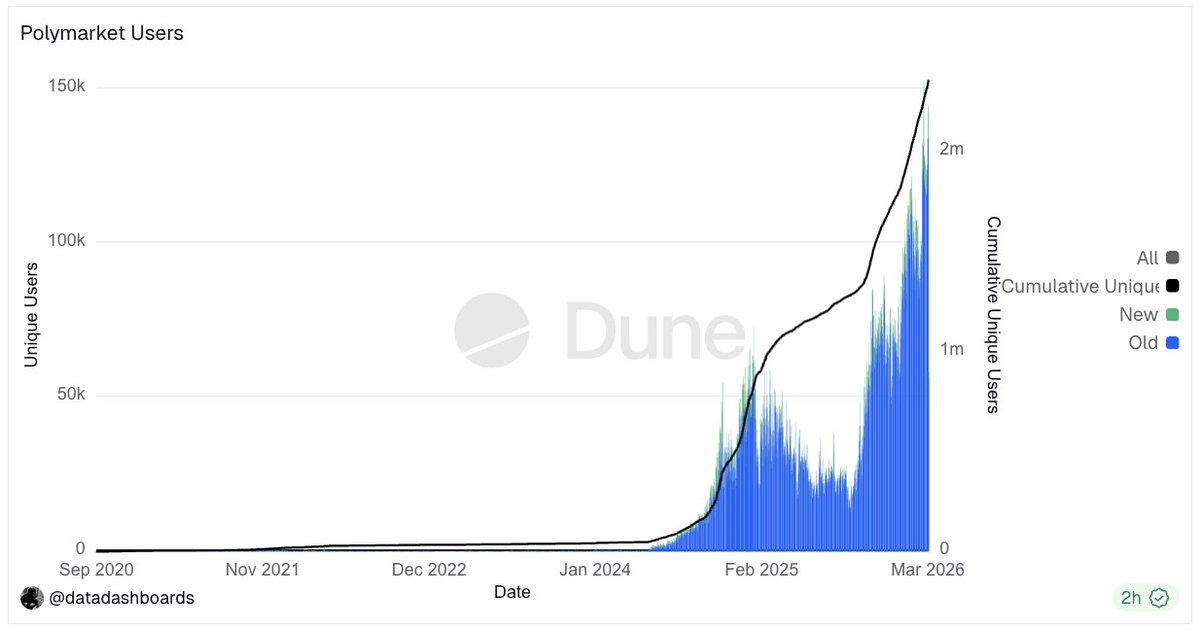
Polymarket is growing fast. But the infrastructure layer around it — bots, dashboards, scanners, execution engines — barely exists. This is a carbon copy of the crypto market a few years ago.

First, everyone traded manually. Then bots appeared. Then $100M+ businesses formed around automation. The companies that moved early became the standard infrastructure of the industry.
Just think about it: Polymarket raised a record amount of funding, just like Kalshi

Prediction markets are at that same inflection point right now. The difference: the window is still open.
The model: Polymarket Automation as a Service
Instead of trading yourself, you build tools for traders. You're not competing with them — you're selling to them.
The Step-by-Step Playbook: From Zero to $1M/Year
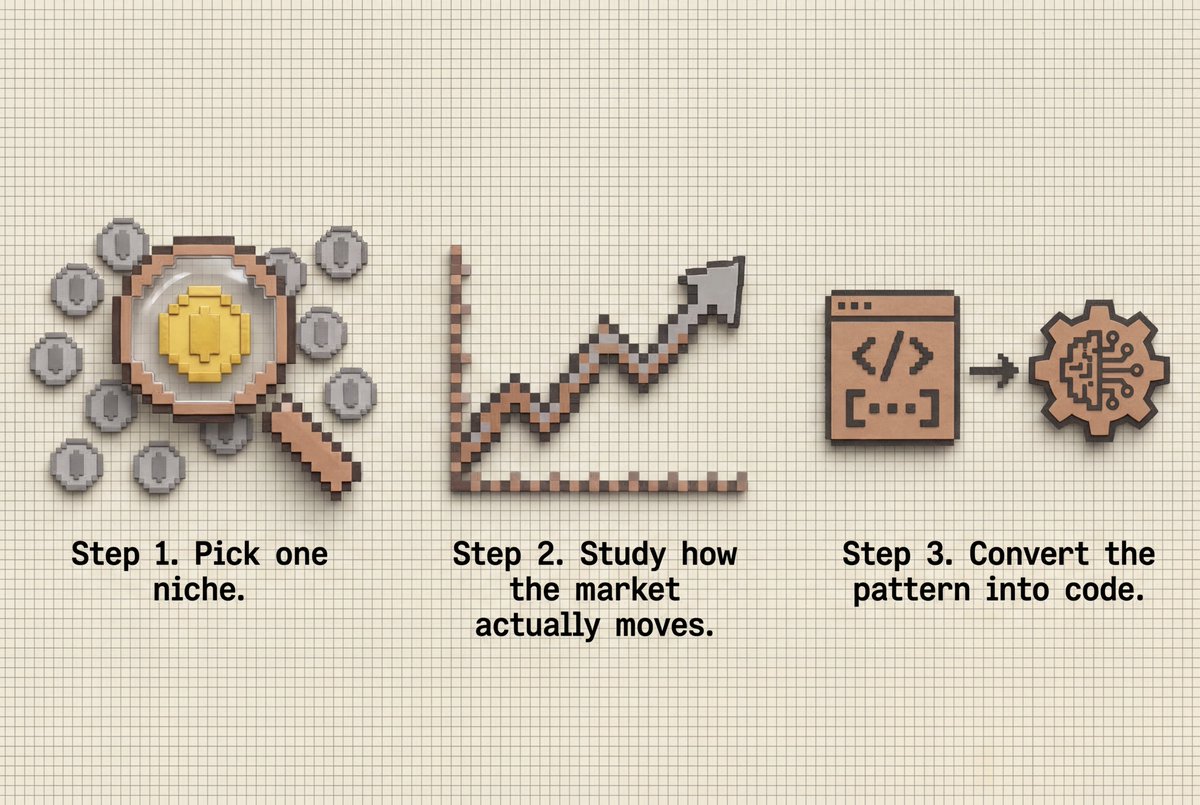
Step 1. Pick one niche.
Specificity beats universality. Trying to build for everything is a guaranteed way to build nothing. Here are the most popular niches on Polymarket that work right now:
High-Frequency Markets (Best for Automation)
- Bitcoin 5-minute rounds. High frequency, clean external signal (Binance price), constant flow of inefficiencies. Perfect for beginners in automation.
- Ethereum price predictions. Similar to BTC but with different volatility patterns. ETH/USD movements on exchanges create consistent arbitrage opportunities.
- Stock market daily closes. S&P 500, NASDAQ, individual stocks. Markets close at 4pm EST — clear endpoint, external price feeds, predictable volume spikes.
Sports Markets (Large Audience, Predictable Patterns)
For any of these sports markets, Composio's API-Sports toolkit covers 2,000+ competitions with live scores, player stats, injuries, lineup data, and pre-match predictions — 31 tools out of the box.
The edge: Injury and lineup data is underused alpha. Polymarket odds often lag 5–10 minutes behind a confirmed team sheet.
This is your arbitrage window.
- American football (NFL). Rich statistics, predictable patterns, massive audience of traders willing to pay. Game-by-game markets and player props.
- Basketball (NBA). High-scoring game creates more micro-markets. Player performance, quarter outcomes, point spreads — all backed by extensive stats.
- Soccer (Premier League, Champions League). Global audience, multiple leagues, year-round activity. Match outcomes, goal totals, card predictions.
- Baseball (MLB). Statistical paradise. 162 games per season, pitcher matchups, weather impacts, run totals.
- Tennis (Grand Slams, ATP/WTA). Individual sport = cleaner data. Point-by-point betting, set outcomes, tournament winners.
Politics & Elections (High Volume Events)
- US Presidential elections. $500M+ in volume during election cycles. State-by-state predictions, candidate chances, debate outcomes.
- Congressional races. Senate and House predictions. Lower volume but less competition.
- International elections. UK, France, Germany, Brazil. Less saturated than US markets.
- Political events. Cabinet appointments, policy outcomes, impeachment odds, legislative votes.
Weather & Natural Events
- Weather prediction markets. Weather models (NOAA, ECMWF) update faster than Polymarket — perfect arbitrage for automation. Temperature ranges, precipitation, extreme events.
- Hurricane tracking. Landfall predictions, intensity forecasts, path projections. Clear external data sources.
- Natural disasters. Earthquake probabilities, wildfire spread, flood predictions.
Entertainment & Pop Culture
- Awards shows. Oscars, Grammys, Emmys. Predictable timelines, insider information leaks, historical patterns.
- Box office predictions. Opening weekend numbers, total gross projections. External data from tracking sites.
- TV show outcomes. Reality show winners, finale predictions, renewal/cancellation bets.
- Celebrity events. Marriages, divorces, career moves. High engagement, viral potential.
Crypto & Tech
For BTC/ETH specifically,API Ninjas via Composio gives you real-time crypto prices and 24-hour market data in the same tool call as your other feeds. Keeps the architecture clean — one integration layer rather than separate Binance and CoinGecko connections to maintain.
- Crypto regulations. ETF approvals, SEC decisions, regulatory timelines. High stakes, clear binary outcomes.
- Tech company earnings. Revenue beats, product launches, CEO changes. Quarterly cycles, predictable announcement dates.
- AI milestones. Model releases, capability benchmarks, company valuations. Fast-moving space with information asymmetry.
Economic Indicators
This whole niche runs on the same data feed problem.
Composio'sAPI Ninjas toolkit has interest rate data, real-time inflation figures, and earnings calendars built in — the exact signals you'd compare against Polymarket odds to find the lag.
No separate API key management per source.
- Federal Reserve decisions. Interest rate predictions, basis points, meeting outcomes. Clear schedule, external economic data.
- Unemployment numbers. Monthly releases, predictable timing, pre-release indicators from private data.
- Inflation reports. CPI, PCE readings. Monthly cycles, economist forecasts create edge opportunities.
- GDP growth. Quarterly releases, revision predictions, recession odds.
Emerging Categories (Low Competition)
- Space & Science. Rocket launches, mission success, discovery announcements. SpaceX, NASA, private space companies.
- Health & Pandemics. Disease spread, vaccine approvals, public health milestones. Sensitive but high-volume during crises.
- Supreme Court decisions. Case outcomes, justice votes, ruling timelines. Legal expert predictions vs. market odds.
- Tech product launches. iPhone sales, new platform adoption, hardware specs. Leak culture creates information edges.
Step 2. Study how the market actually moves.
Most markets follow repeatable patterns. Your job is to find and document them:
- How fast do probabilities react to external data?
- Where does liquidity cluster in the order book?
- How long do inefficiencies last before they disappear?
- How do large traders move the market?
Step 3. Convert the pattern into code.
Once you understand the pattern, it becomes a script.
The typical architecture:
- Monitor external data feeds — Binance API, sports data via Composio's Odds API toolkit, weather models. (embedded URL, not mentioned separately)
- Detect the lag — when Polymarket probabilities don’t match reality.
- Auto-enter — position opens before the order book adjusts.
- Auto-exit — closes after probability syncs.
But here's where things changed recently.
You no longer need a full engineering team to build this.
Claude can now act as the development layer for these systems.
Instead of writing everything from scratch, you describe the trading logic and Claude generates the code architecture, API connections, monitoring scripts, and execution logic.
For example:
Ask Claude to build a bot that pulls Binance BTC price and sportsbook lines through Composio, then compares them to Polymarket odds.
Claude can generate:
- the API integration
- the monitoring script
- the probability comparison logic
- the automated execution flow
I created a simple bot in Telegram that scans and sends me new Polymarket events and new markets faster than anyone else.
The notification layer gets painful fast - separate Telegram integration, then someone wants Slack, then Discord. Composio collapses these into a single tool call, so you're not rebuilding the notification pipe every time.
What used to take weeks of engineering work can now be prototyped in hours.
Here’s the bot OpenClaw built to track new Polymarket markets.
Or just search in Telegram: poly_parser
In other words, Claude turns automation from a deep technical problem into a product-building problem.
And once the bot works, it stops being a script.
It becomes infrastructure.
Composio: The Missing Infrastructure Layer
Claude building your bot is one thing. But your bot still needs to actually connect to the real world price feeds, sports APIs, weather data, notification channels, databases for logging.
Claude handles the code. Composio handles the connections to external services and APIs.
That's where most automation projects die.
You get the logic working, then spend 3 weeks integrating:
- Binance API for crypto prices
- ESPN/sports data feeds
- Weather APIs
- Telegram for notifications
- Google Sheets for trade logging
- Slack for team alerts
Each one needs separate API keys, authentication flows, rate limit handling, and error management. And when an API changes, you're rebuilding.
Composio solves this with one integration.
Claude handles the logic - the strategy, the monitoring scripts, the execution flow. But it can't hold API keys or maintain live connections to Binance, sportsbooks, or Telegram. That's where Composio comes in. It gives Claude access to external services so the bot your agent builds can actually talk to the real world.
Composio sits between Claude's code and the services it needs to reach. One integration layer instead of wiring up each API separately.
What this means for speed:
Without something like this, Claude generates your bot logic and then you spend 2-3 weeks integrating 8 different APIs before you can actually launch. With Composio in the stack, that integration step mostly disappears.
Example: "Build a bot that monitors NFL injuries, compares to Polymarket odds, and alerts via Telegram" goes from a 3-week integration project to a same-day launch.
The architecture advantage:
When you're selling bot subscriptions or dashboards (Step 4), your customers will ask:
- "Can you add Slack notifications?"
- "Can you log to our Notion database?"
Without Composio: each request is a custom integration project.
With Composio: "Yes, it's one line of code. Live tomorrow."
That's the difference between infrastructure that scales and infrastructure that breaks.
Step 4. Turn the tools into infrastructure.

Most traders can't build these systems. That's your business. The product lineup:
- Bot subscriptions. Ready-made solutions with customizable parameters.
- Copy-trading dashboards. Auto-follow the strategies of the best traders.
The logging pipeline for this — every trade, entry price, outcome, P&L is a Google Sheet or Notion DB away with Composio.
That becomes the performance dashboard users actually pay for, and you're not building OAuth for it.
- Market scanners. Real-time anomaly and inefficiency detection.
- Execution engines. High-performance systems for serious players.
Step 5. Monetize.
Four revenue tiers:
- Bot subscriptions — $200–500/month. Mass market.
- Private tools — $1,000–5,000/month. Serious traders.
- Automation dashboards — $5,000–10,000 setup + monthly. Teams and funds.
- Institutional solutions — $10,000+/month. Enterprise level.
Real Products Being Built Around Polymarket
Prediction markets are still early.
But a new ecosystem of tools is already starting to form around them.
Most of these products aren’t about predicting outcomes.
They’re about building the infrastructure traders depend on.
Here are some examples.
1. Analytics Dashboards
Platforms that track:
- market probabilities
- volume and liquidity
- top traders
- historical performance
These tools turn raw market data into actionable insights.
Instead of browsing markets manually, traders see the entire ecosystem at a glance.
2. Trader Tracking Platforms
Some tools focus on wallet intelligence.
They track profitable traders and reveal patterns like:
- win rate
- average position size
- market specialization
This allows users to study how successful traders operate.
3. Copy-Trading Bots
Instead of trading manually, users can mirror profitable wallets.
The system automatically replicates trades in real time.
Key features include:
- portfolio allocation
- risk controls
- trader ranking systems
This turns trading strategies into automated investment products.
4. Arbitrage Bots
These systems monitor multiple markets simultaneously.
They compare:
- sportsbook odds
- crypto prices
- Polymarket probabilities
When price discrepancies appear, the bot executes trades automatically.
The edge often lasts only seconds.
Automation makes it possible to capture it.
5. Market Scanners
Polymarket lists hundreds of markets at any given time.
Market scanners help traders discover opportunities faster.
These systems detect:
• sudden probability changes
• large trades entering the order book
• abnormal liquidity patterns
The result is a signal-driven trading workflow.
But the real opportunity lies somewhere else. It’s in building the tools that everyone else uses.
They come from building the infrastructure around it.
Prediction markets are no different.
150 traders at $300/month = $540K/year. And you never need to predict anything correctly.

The math to seven figures is surprisingly straightforward. You don't need thousands of users:
- 150 traders × $300/month = $540,000/year
- 5 private clients × $2,000/month = +$120,000/year
- 1 institutional client × $10,000/month = +$120,000/year
Total: $780,000/year — and that's a conservative number with zero growth.
The window is open. But not forever.
Polymarket is still early. Most participants trade manually. The infrastructure layer barely exists. That's the structural opportunity.
What makes the timing perfect right now:
- API is open and accessible — low technical barrier to entry.
- Volume is growing — $500M+ on major events.
- Crypto-native audience — already comfortable with SaaS payments.
- Early movers capture network effects and first-mover reputation.
The question isn't whether this happens. The question is who builds it.

History repeats with remarkable consistency:
- Gold rush: the shovel sellers got rich, not the miners.
- Internet boom: payment systems and CDNs outperformed most websites.
- Crypto: exchanges and infrastructure protocols made more than most traders.
Prediction markets are the next wave. The people building infrastructure today are laying the foundation of an ecosystem that will define the next decade.
Sell shovels.
Connect & Follow
If you want to dive deeper into the world of Clawdbot, mathematical strategies, and Polymarket insights, join the my profile:
https://x.com/kirillk_web3 - my account
Or just search in Telegram: poly_parser
Thank you for reading. Prediction markets are still early.