None of what I'm about to share is a fact. These are my own opinions from 3 years of doing nothing but app growth.
Inside those hours, I've spent over 1,400 of them in direct conversations with founders and growth marketers.
That's 58 straight days of uninterrupted consulting.
And I have some insights.
Take it with a pinch of salt. Or don't. Either way, I think you'll find it useful.
For the past few years, the internet has been obsessed with one word.
✨Virality✨
Viral apps. Viral TikToks. Viral loops. Viral everything.
And yet, most of the founders I talk to are more confused than ever.
They've watched the tutorials, studied the case studies, posted the content.. And their app is still stuck at the same MRR it was six months ago.
So what's actually going on?
The Biggest Misconception in Consumer Apps Right Now
Here's my honest take: Product is not dead. And distribution is not "everything."
I know. That goes against the gospel of Tech Twitter, but hear me out.
Making TikToks has become easier than ever. Our feeds are flooded with slop, and yet, good marketers remain among the most sought-after professionals on the planet.
Now think about this from the other side.
Building a product has become widely accessible. The barrier to entry is the lowest it's ever been. Vibe coding is a thing. AI can one shot your entire MVP in a few minutes.
Does that mean developers aren't valuable anymore? No.
Forget what the internet says. Focus on the fundamentals:
1. build a killer product and 2. aggressively distribute it.
Let me show you how both sides work.
Part 1: Building
If you haven't yet found product-market fit - if you're doing under $250K a year - this section is for you. Everyone else, feel free to skip ahead.
Since the internet went mainstream in the mid-to-late 1990s, information has been commoditized. Anyone can access virtually any piece of information, for free, at any time, on their phone. So here's a question that should bother you: Why didn't universities go out of business? They sell information, right? And suddenly all that information was available for free... the world's greatest lectures uploaded to YouTube, entire textbooks turned into PDFs and so on. Yet enrollment and tuition kept rising. And people kept paying. Why? Because the information isn't the product. The curation is. Selected for a specific use. Organized in a specific sequence. From credible sources. That curation - that context - is what people actually pay for. (there's a deeper lesson here about the fundamentals of why people buy, which has very little to do with logic, but more on that later)
My point is: you do not need a new idea. You do not need to solve a new problem.
Here's what a "good" consumer app actually requires, and it's far less than you think:
1. A novelangleto an existing solution. Not a novel solution. A novel angle.
Let me explain:
- A Bible app - but specifically for women;
- A screen blocker that won't unlock until you complete a task;
- A private photo vault.
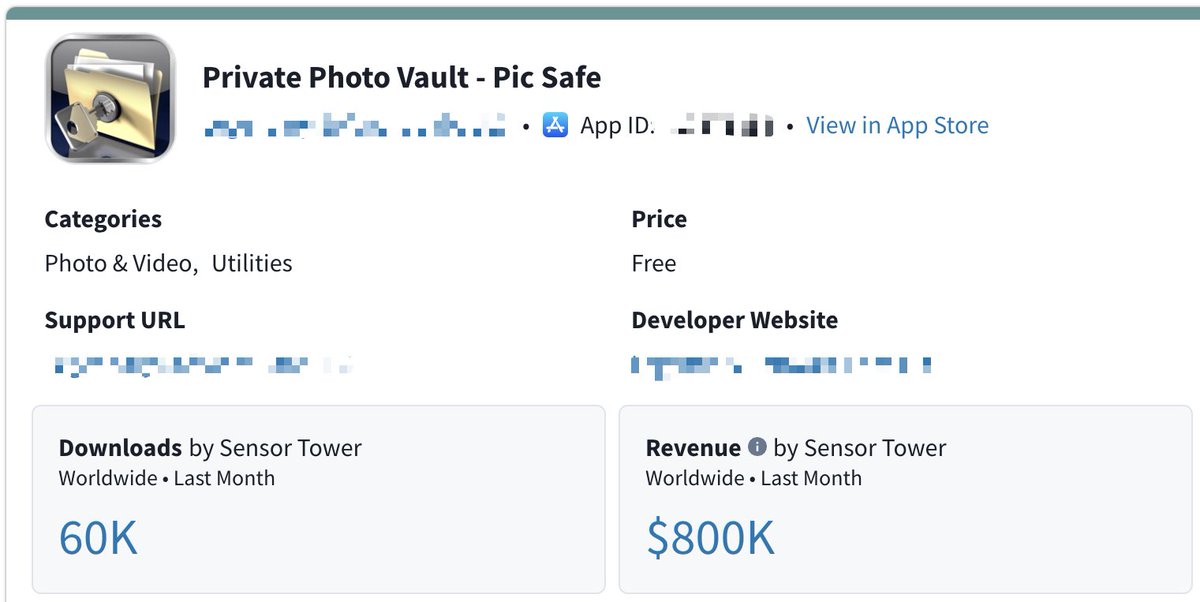
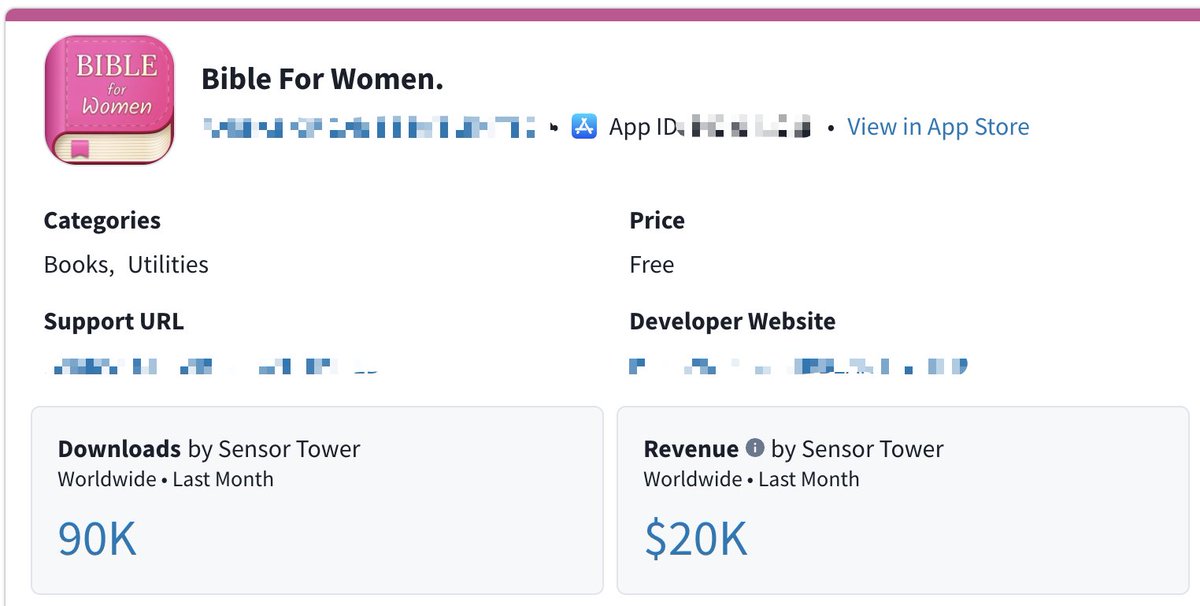
The solution already exists. Your job is to repackage it for a specific person with a specific need.
2. It has to be visually self-explanatory.
Q: If someone watched a 15-second demo of your app with the sound off, would they understand what it does?
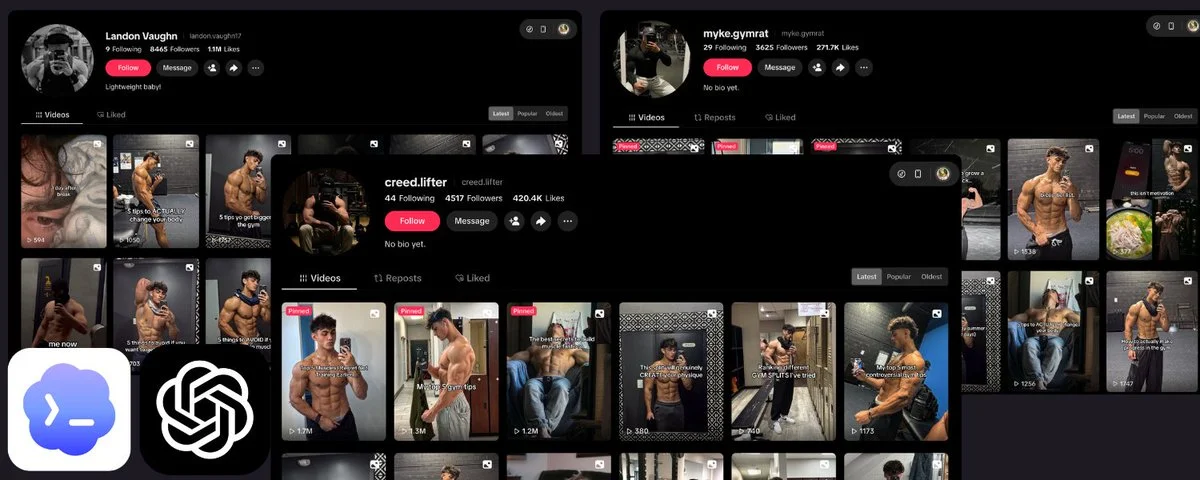
If yes, you have something that works on short-form video. If no, you have a problem that no amount of marketing can fix. Your app demo should function as a standalone TikTok. (see below)


3. One to two main features; one value proposition.
Not three. Not five. One.
The fastest way to kill a consumer app is to build it like enterprise software.
Nobody downloads an app because it has 47 features.
They download it because it does one thing they care about, better than what they're currently using.
That's it guys.
Novel angle. Visually obvious. Radically simple.
Everything else is noise.
Part 2: Distribution
Now we get to the part everyone thinks they understand but almost nobody does.
If you truly want to become a good marketer - or even just make a few bucks - what I'm about to share will serve you whether you're running for president or marketing a couples app on TikTok.
That's not hyperbole. The fundamentals are identical, and they're not new.
Let me take you back about 2,000 years.
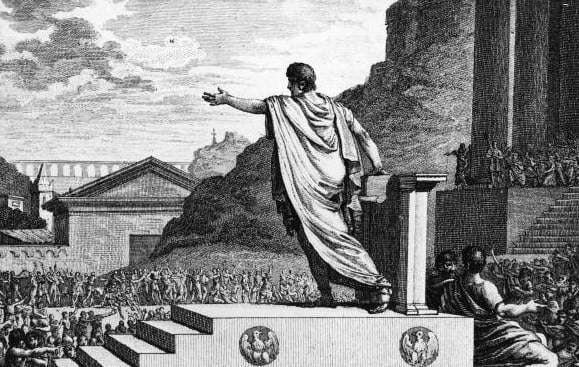
In 63 BC, a Roman lawyer named Marcus Tullius Cicero ran for the highest office in Rome, with no military record, no family name and no inherited power. By every measure, he should have lost.. But he won in a landslide. How? His brother wrote him a campaign handbook. And in it, he laid out the principles of mass persuasion that every successful marketer - knowingly or not - still uses today. The core insight was this: to move the masses, you must appeal to their emotions first and their logic second.Cicero won by making people feel something. Fear, hope, pride, it doesn't matter.
Sound familiar? It should.
Every viral TikTok, every high-converting ad, every piece of content that's ever made you stop scrolling operates on the same principle.
Emotion first. Logic second. Always.
Once you understand that emotion is the engine, you need to understand the two mechanisms that keep people consuming.
Mechanism 1: Open Loops
An open loop is basically an unresolved question in the reader's mind.
t's the reason you can't stop watching a show mid-episod
It's the reason clickbait won when you know it's clickbait.
It's the reason why "GRWM" videos work so well.. and it's the reason why you keep watching the video below waaaaay past a reasonable time.

The human brain has a physical discomfort with unresolved information. Psychologists call it the Zeigarnik Effect: we remember incomplete tasks and unfinished stories far better than completed ones.
When you say "I spent $5k on XYZ and I hate what I found..." - you've opened a loop. The reader's brain will not rest until that loop closes.
Every great piece of content opens a loop in the first few seconds and delays closing it until the very end.
Mechanism 2: The Curiosity Gap
The curiosity gap is the space between what someone knows and what they want to know. It's foreshadowing applied to marketing.
When a movie shows you the ending first, then cuts to "72 hours earlier" - that's a curiosity gap.
You know the destination. You don't know the route. So you sit and watch for 2 hours.
Open loops and curiosity gaps are the architecture of how human attention works. Cicero used them. Soap operas use them. And the best content creators on TikTok - whether they know the terminology or not - use them in every single video.
The Real Game
Building in consumer means you need to speak to the masses one way or another.
You can't hide behind a sales team or a niche LinkedIn audience.
You're in the arena.
And in the arena, the rules haven't changed in 2,000 years.
Build something simple that solves a real problem from a fresh angle. Then distribute it by making people feel something before you ask them to think about anything.Open loops to create tension. Curiosity gaps to sustain attention. Emotion to drive action.
That's persuasion. And persuasion - unlike trends, algorithms, and growth hacks - doesn't have an expiration date.